Shared key cards that never get deactivated, a visitor log kept on paper at reception, and a server room with the same lock as the pantry — if any of that sounds familiar, your access control system is quietly creating risk rather than managing it. Most offices don't notice the gap until an audit, an incident, or an ex-employee's card that still works flags it. Here are the five signs we see most often, and what an upgrade actually fixes.
1. Nobody Can Say Exactly Who's in the Building Right Now
If your access system can't produce a real-time list of who badged in today, you don't have access control — you have a lock with extra steps. A proper system logs every entry with a timestamp, so facilities and HR can answer "who's on-site" without walking the floor.
2. Key Cards Outlive Employment
Ask how many active cards are tied to people who no longer work there. If nobody knows the answer, that's the problem. Cloud-managed access lets you deactivate a credential the moment someone exits — no card collection, no re-keying.
3. Every Door Uses the Same Level of Security
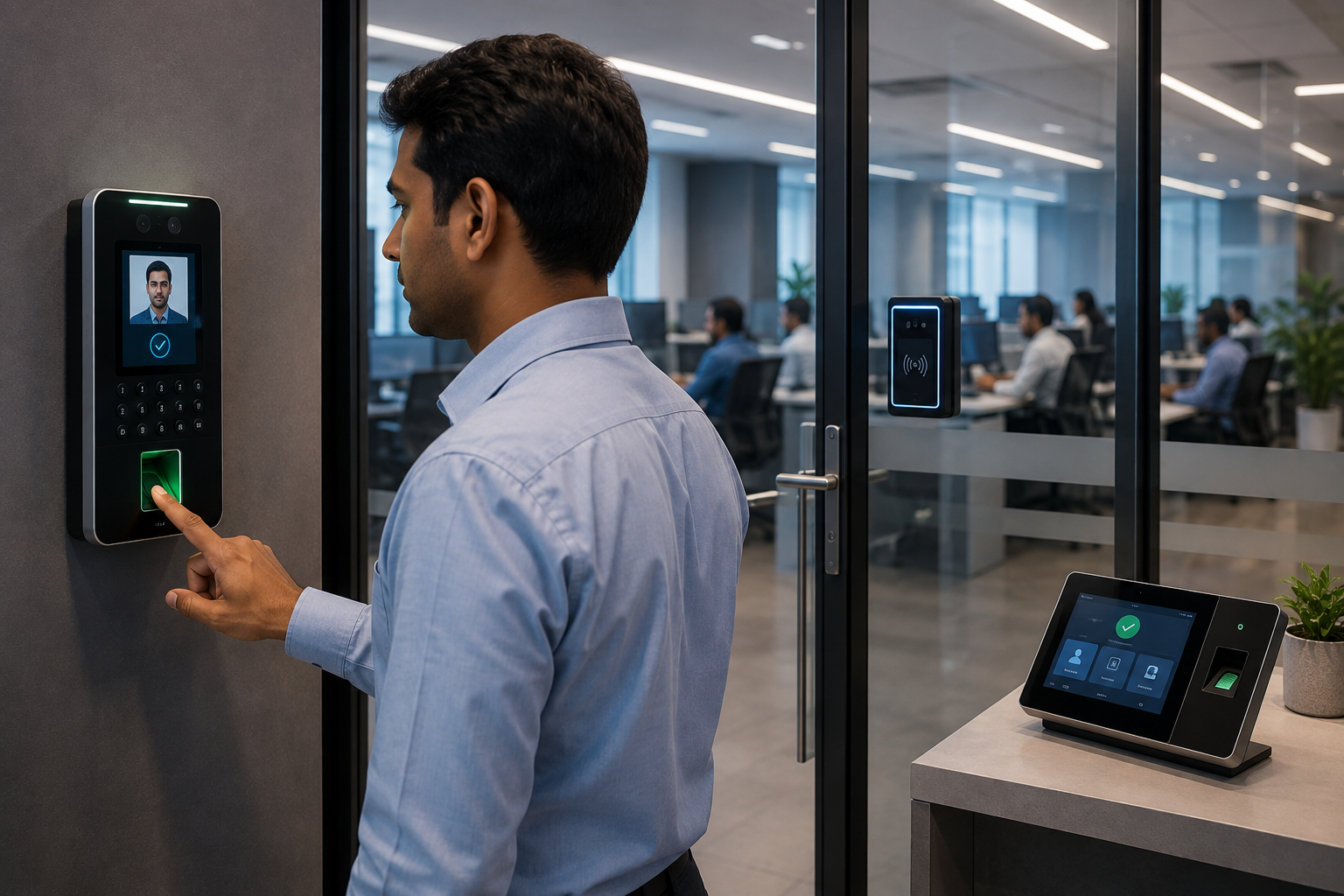
A swipe card that opens the main entrance shouldn't open the server room. Zone-wise permissions mean sensitive areas — server rooms, finance, executive floors — require a stronger credential, like biometric or PIN-plus-card, than a general office door does.
4. Attendance and Access Are Two Separate Systems
If your team badges in for the door and separately punches a biometric machine for payroll, you're maintaining two databases that should be one. Integrated systems turn every access event into an attendance record automatically.
5. There's No Record After an Incident
When something goes missing or a door is found propped open, the first question is always "who was there?" Without logged entry data, that question has no answer. A working system produces an audit trail without anyone having to ask for one in advance.
The goal isn't more locks — it's a system that can answer "who, where, and when" without anyone having to guess.
What an Upgrade Actually Looks Like
None of this requires ripping out your doors. Most upgrades layer a new reader and a cloud-managed controller onto existing door hardware, migrate the credential database, and add zone-based rules where they're missing. The rollout is typically staged floor by floor, so the building keeps operating normally while it happens.
Recognize more than one of these signs?
Get a Free Assessment