Most homeowners want to automate everything on day one and end up using none of it. Here's the sequencing we recommend — from lighting and curtains to full scene automation — that actually gets used, not switched off.
Start With Lighting and Curtains, Not Everything at Once
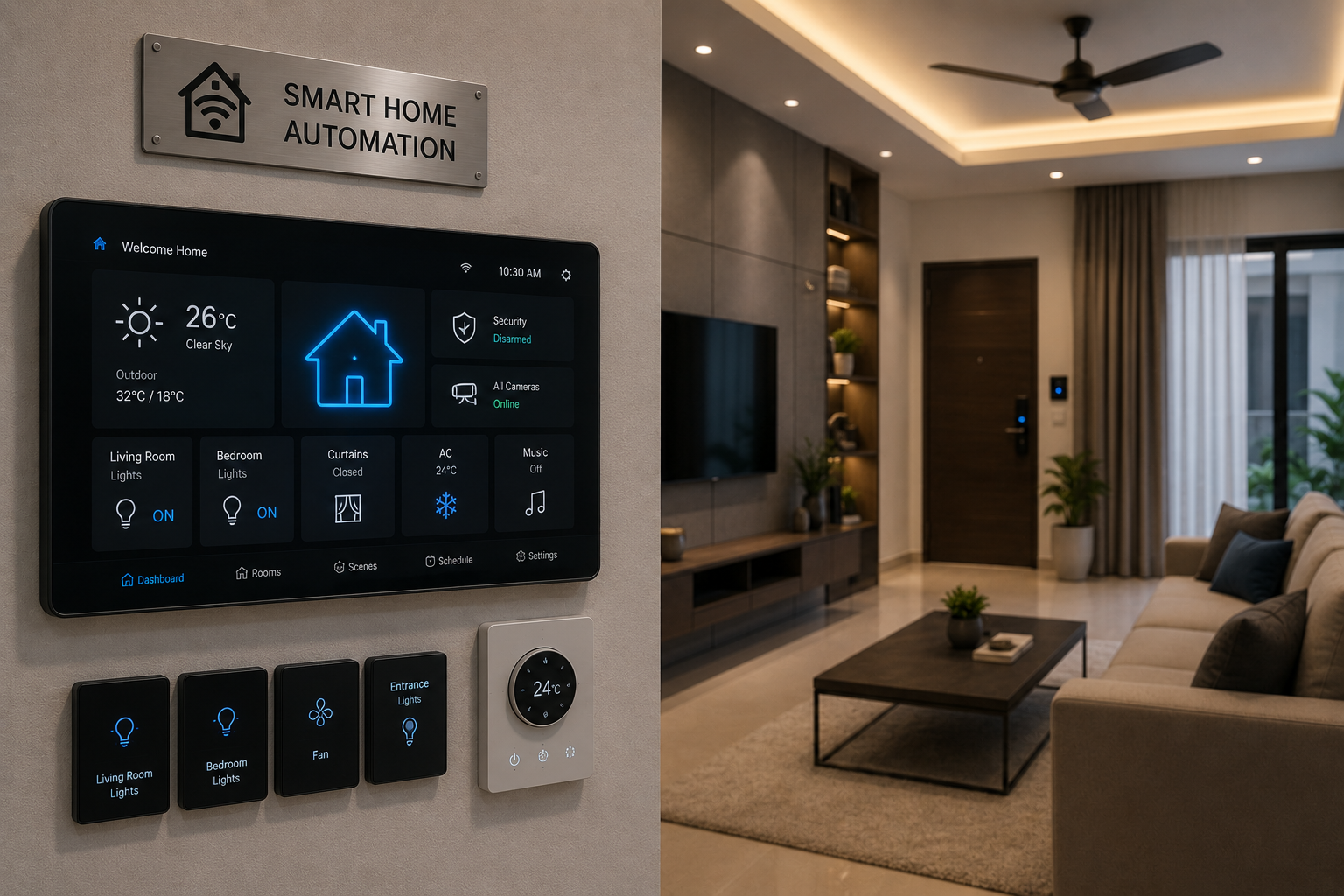
Lighting and curtain automation deliver the most noticeable day-to-day change for the least complexity. They're also the easiest to retrofit without rewiring your entire home. Get these right first, and every other automation you add later builds on a system you already trust.
Add Scenes Before Adding More Devices
A single "Good Morning" scene that opens the curtains, turns on the kitchen lights, and sets the AC to a comfortable temperature is worth more than five separate smart devices you have to control individually. Scenes are what make automation feel automatic — buy the devices, but design the scenes before you consider the job done.
Where Voice Assistants Actually Fit
Alexa and Google Home are convenient, not essential. They work best once your lighting and scenes are already solid — voice control is a nice layer on top of a good system, not a fix for a poorly planned one.
Energy Scheduling Is the Quiet Win
Automatic AC shutoffs when a room's empty, curtain schedules that reduce heat gain in the afternoon, and lighting that turns off in unused rooms don't feel exciting, but they're often the automation that pays for itself fastest on the electricity bill.
The best automation is the one you stop noticing — because it's already doing the right thing before you think to ask.
A Realistic Rollout Sequence
- Phase 1: Lighting and curtain automation in main living areas
- Phase 2: Scene programming — morning, evening, movie, away
- Phase 3: AC and appliance scheduling tied to occupancy
- Phase 4: Voice assistant integration and remaining rooms
Spread over a few months, this sequence means every phase is something the household is already using confidently before the next one arrives.
Ready to plan your home's automation?
Talk to Our Team